

Homeowners often ask me how long they will be without a working kitchen. The honest answer is that the construction schedule depends on decisions made weeks or months before demolition.
In my experience guiding Dallas–Fort Worth homeowners, a kitchen remodel moves smoothly when the design is resolved, products are confirmed, and every trade understands the same plan. Starting demolition before those pieces are ready rarely saves time.

A realistic kitchen remodel has three timelines
When people ask about duration, they usually mean the days when workers are inside the home. I look at three connected periods: design and planning, procurement, and construction. A complete project can take several months from the first meeting to the final walkthrough even when the active construction phase is much shorter.
1. Design and planning
This phase defines the layout, cabinet plan, appliances, lighting, plumbing, materials, scope, and investment range. A straightforward same-footprint kitchen may move through planning faster than a project involving walls, structural review, custom details, or adjoining rooms.
I do not rush this work because every unresolved decision eventually reaches the jobsite. It is less disruptive to compare options on paper than to stop construction while a team waits for an answer.
2. Product ordering and lead times
Cabinetry, appliances, plumbing fixtures, lighting, tile, and specialty materials do not all arrive on the same schedule. Custom cabinets and made-to-order pieces can require significant lead time. Products should also be inspected before installation begins.
Ordering early does not mean filling your garage with random boxes. It means building a procurement plan around the construction sequence and confirming what must be onsite before demolition.
3. Active construction
Once work begins, a kitchen may move through protection, demolition, framing, rough plumbing and electrical, inspections, drywall, flooring, cabinetry, countertops, backsplash, painting, appliance installation, finish work, and final corrections.
Many full kitchen remodels require roughly six to twelve weeks of active construction, but that is a planning range rather than a promise. Structural changes, extensive trade work, custom materials, inspections, and conditions discovered after demolition can extend the schedule.
What commonly delays a kitchen remodel?
- Changing the layout after cabinetry or rough work is approved
- Ordering appliances after cabinet drawings are complete
- Backordered tile, fixtures, hardware, or lighting
- Discovering water damage or outdated systems after demolition
- Permit or inspection timing
- Adding work that was not included in the original scope
- Late approvals from the homeowner or design team
How homeowners can help protect the schedule
Make major decisions before construction, respond promptly when a true field question arises, and avoid treating allowances as finished selections. Ask for decision deadlines and understand which item affects the next trade.
It is also important to discuss how the household will function during the project. Set up a temporary kitchen, protect pets, decide where deliveries can be stored, and plan for periods of noise or limited access.
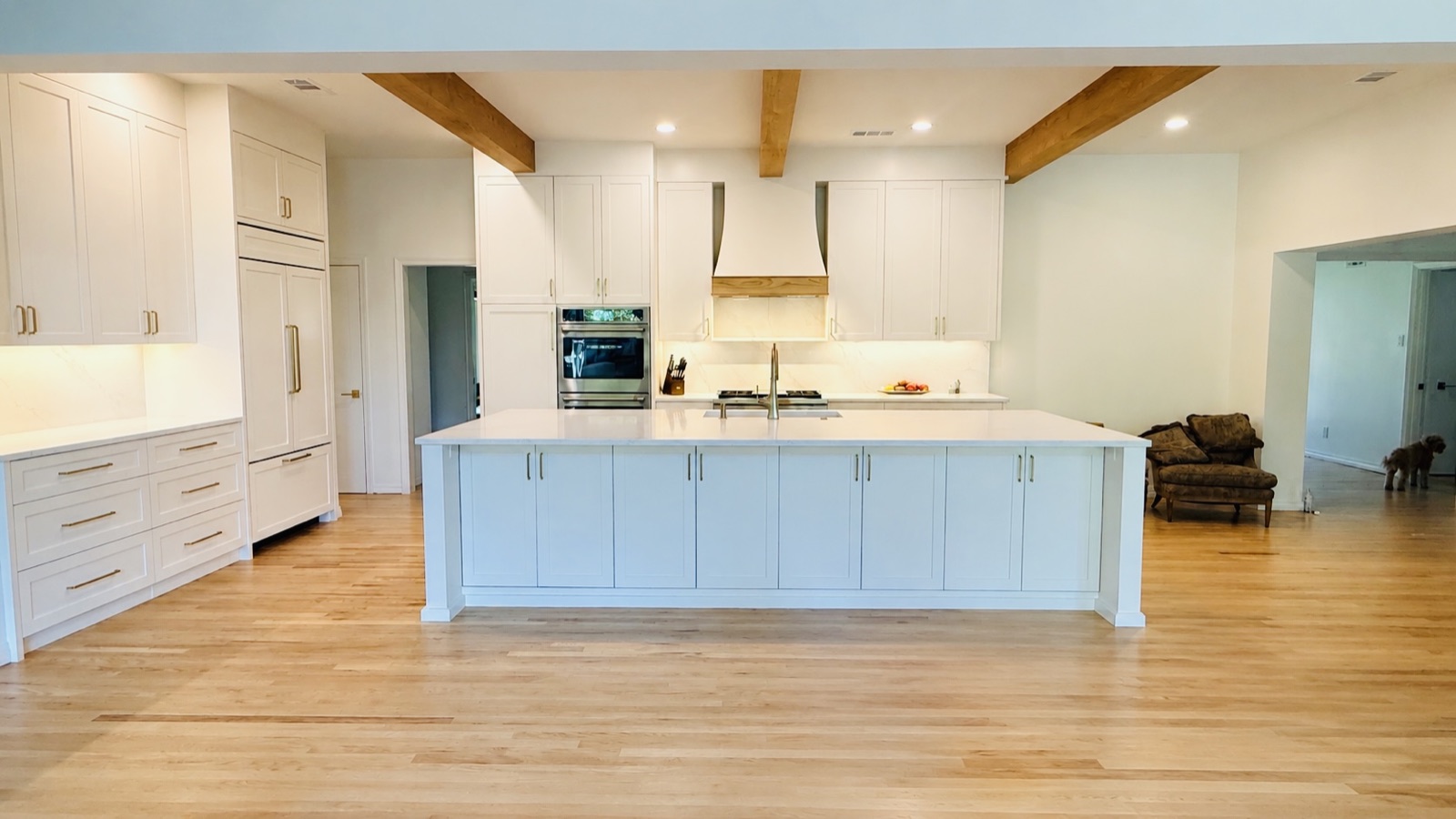
Why the shortest schedule is not always the best schedule
A rushed timeline can hide missing coordination. I would rather give a homeowner a realistic sequence than an attractive date that depends on everything going perfectly. Quality work needs enough time for proper preparation, installation, inspections, curing, and correction.
Communication matters just as much as speed. You should know what phase the project is in, what is happening next, and whether any decision is affecting the schedule.
Plan the timeline before demolition
Homecorp connects floor plans, interior design, product decisions, and construction management so the schedule is based on a defined project. Review our Dallas kitchen remodeling services, see our remodeling portfolio, or schedule a consultation.
Frequently asked questions
Can a kitchen remodel be completed in two weeks?
A limited cosmetic update may be brief, but a full remodel involving cabinetry, countertops, multiple trades, inspections, and finish work normally requires a longer coordinated schedule.
Should cabinets be ordered before demolition?
In most projects, cabinet drawings and specifications should be approved and lead times understood before demolition begins.
What happens if hidden damage is discovered?
The team should document the condition, explain the repair options, and show how the additional work affects cost and time before proceeding.
Leave a Reply